Episode 7: Why contingent is strategic, and why programs haven't kept up
Episode 7: Why contingent is strategic, and why programs haven't kept up
Episode 7: Why contingent is strategic, and why programs haven't kept up

Description
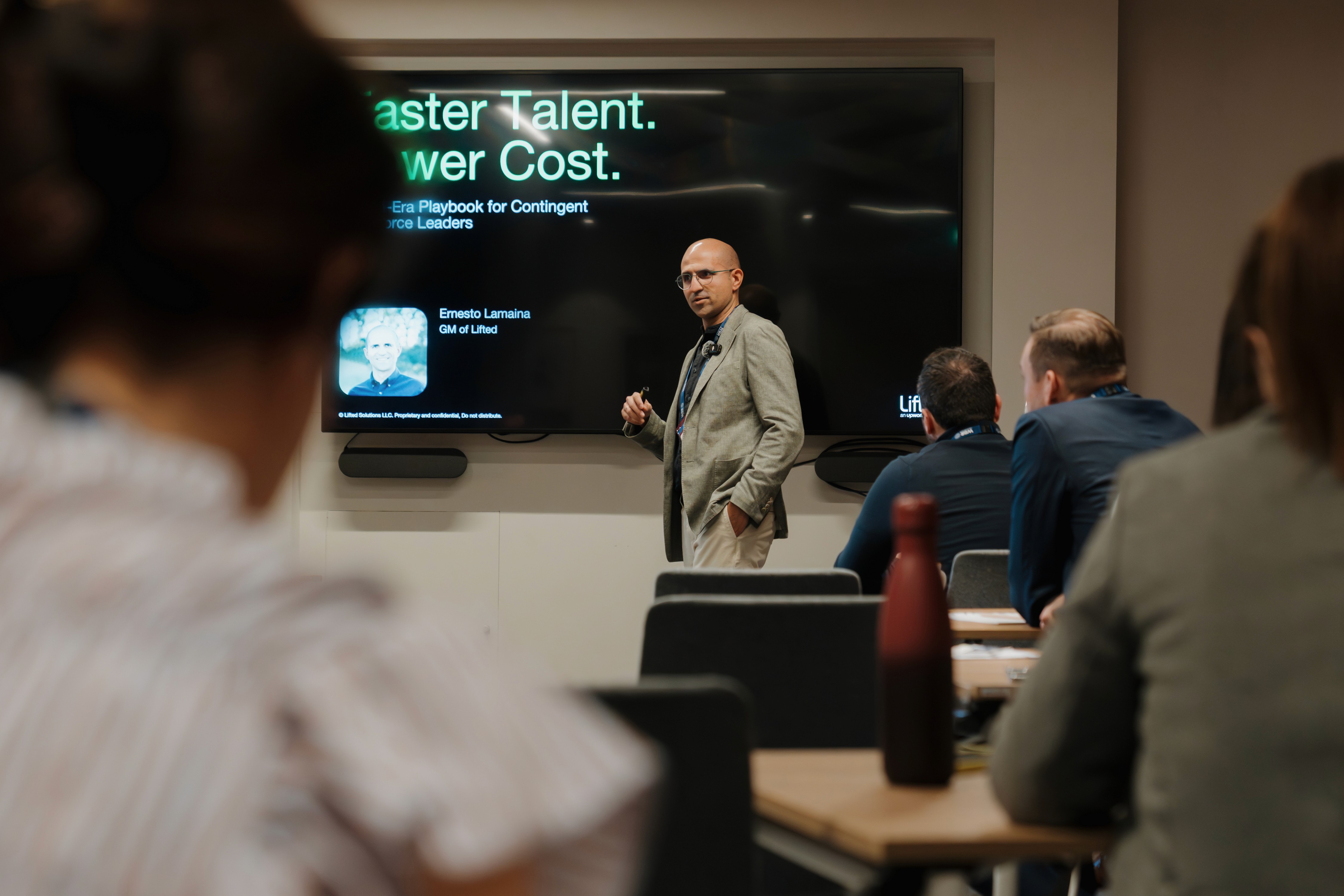
Why are contingent workforce programs slow to evolve when flexibility is their strategic value? Ernesto explains the stakeholder, regulatory, vendor, and technology constraints behind the gap - and why modernization will come through steady integration, not rip and replace.
Key insights
Contingent talent gives businesses the flexibility to adapt quickly, especially as AI accelerates change
Flexibility is not a side benefit; it is the strategic reason companies use contingent workers
Program leaders must balance hiring managers, workers, internal stakeholders, and delivery pressure
Global regulations make fragmentation an inherent feature of contingent workforce management
Legacy vendors can limit how quickly a program adopts modern technology
Technology has improved some program areas, while operational complexity still slows others
Modernization will be gradual and modular as MSP, VMS, IC, AOR, and EOR capabilities evolve together
Featured recourses
Description
Why are contingent workforce programs slow to evolve when flexibility is their strategic value? Ernesto explains the stakeholder, regulatory, vendor, and technology constraints behind the gap - and why modernization will come through steady integration, not rip and replace.
Key insights
Contingent talent gives businesses the flexibility to adapt quickly, especially as AI accelerates change
Flexibility is not a side benefit; it is the strategic reason companies use contingent workers
Program leaders must balance hiring managers, workers, internal stakeholders, and delivery pressure
Global regulations make fragmentation an inherent feature of contingent workforce management
Legacy vendors can limit how quickly a program adopts modern technology
Technology has improved some program areas, while operational complexity still slows others
Modernization will be gradual and modular as MSP, VMS, IC, AOR, and EOR capabilities evolve together
Featured recourses
Read less ...