"If I had to pick one area where large enterprise contingent programs still have an unsolved problem, it's independent contractors."
Staff augmentation and the VMS ecosystem have been getting better for decades. There are solid processes, clear visibility, and reasonable compliance frameworks. It's not perfect, but it's mature.
The independent contractor and agent-of-record space? Still complex for most large enterprises. Here's why.
The typical picture I see: one hiring manager in the US is engaging a contractor directly through an SOW. Another in Germany is using a different process entirely. A third in Singapore doesn't know what their legal exposure is. Meanwhile, not often does everyone in the program office have a clear view of the total independent contractor population, what they're being paid, whether they're classified correctly, or when their engagements end.
That's not an edge case. That's the reality for most large enterprise programs today.
What’s changed is the scale and scrutiny. Independent contractors are no longer a niche workforce category; they are a core part of how enterprises execute. But governance hasn’t kept pace. Most programs were designed around headcounts they could see and control. ICs sit outside that structure, which means procurement, HR, legal, and finance often work from different assumptions. The result is inconsistent policy enforcement, fragmented data, and delayed decision-making at the exact moment speed matters most.
At the same time, the risk profile has materially increased. Misclassification penalties are rising, regulations are evolving country by country, and internal audit functions are asking harder questions. Yet the tools available to manage ICs haven’t kept pace with enterprise requirements. Leaders are left choosing between speed and control—either slow the business down with heavy processes or accept a level of risk they can’t fully quantify. That tension is where most programs stall today, and it’s exactly where the gap becomes most visible.
The platforms that emerged to serve it are mostly oriented around freelancers and project work, which weren't built for the compliance and visibility requirements of a Fortune 500 company. And the enterprise tools designed for those compliance requirements weren't designed with the sourcing capability to actually find talent.
That gap is what we built Lifted around. We took an 18 million-plus active talent pool with classification and indemnification capabilities and connected it to a platform that lets enterprise companies manage their pre-identified independent contractors and source new talent, all in one place.
The Everest Group named Lifted a Star Performer in their FEMS assessment this year. I'm proud of that recognition, not because of the label, but because of what it represents. It means there's external validation that the market problem is real, the segment is growing, and what we've built is genuinely differentiated.
But more than the recognition, what I care about is the feedback we receive from contingent workforce program managers who finally have visibility into a part of their program they've never been able to see clearly before. That's the problem worth solving.
How much visibility does your program actually have over its independent contractor population right now? Think about headcount, spend, classification status.
Subscribe to follow this series. I'll be writing more about how enterprise programs are approaching the IC and AOR space, what's working, and what's still broken.
Author

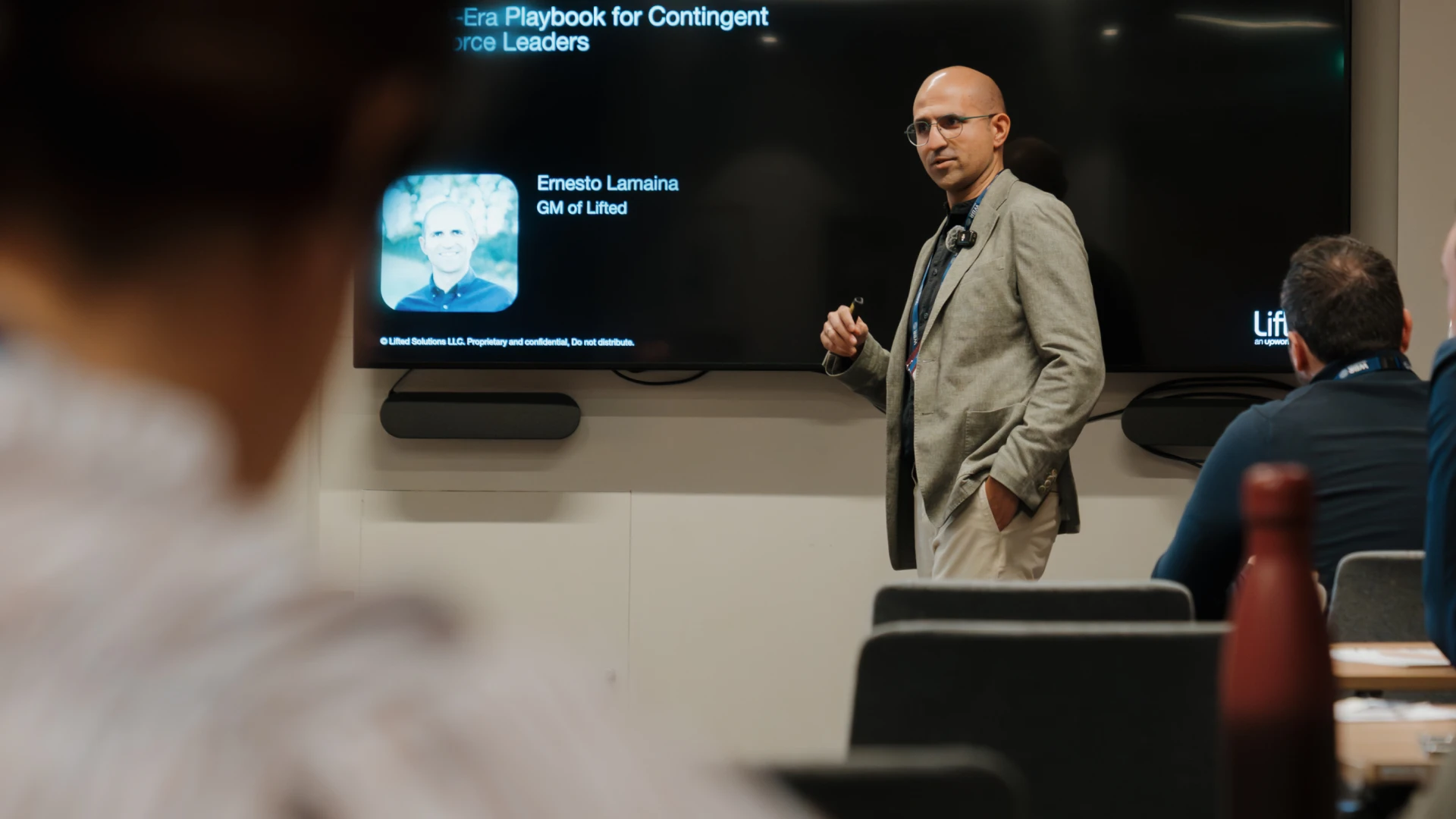
Ernesto Lamaina
GM, Lifted
Ernesto Lamaina is the General Manager of Lifted, an Upwork company dedicated to helping enterprises source, engage, and manage contingent talent across every contract type—independent contractors, staff augmentation, employer of record, and managed services.