"I got an email this morning from a staffing agency I signed up with over ten years ago. They wanted to know if I was interested in a newly graduated role. In a country I haven't lived in for years."
That email is a perfect illustration of a problem that costs enterprises millions every year: the difference between a talent pool and a database.
A database is static. Someone signed up five, seven, or ten years ago. Their profile is sitting there. Nobody knows if they're actively looking. Nobody knows if their skills have evolved. Nobody knows where they actually live today. The database is enormous, but the fraction of it that's actually useful right now is tiny.
And the operational impact goes deeper than outdated information. Static databases create false confidence. On paper, it looks like you have access to thousands or millions of candidates. In reality, only a small percentage are reachable, relevant, and ready to move. That gap distorts planning. Hiring timelines become unpredictable. Teams overcompensate with volume instead of precision.
It also introduces unnecessary costs. Recruiters spend time chasing cold leads. Hiring managers review profiles that no longer match the role. Roles stay open longer, delaying project delivery and increasing reliance on expensive, last-minute solutions. The inefficiency isn’t always visible,but it’s always there.
A talent pool is alive. You know who's looking for a job today. You have current information about skills, availability, and aspirations. When a role opens up, you're not blasting out to 300 people hoping someone bites. You're reaching out to people who are qualified and interested right now.
That shift, from static records to real-time signals, fundamentally changes how hiring is performed. It turns talent sourcing into a targeted, data-driven process rather than a volume exercise. It gives hiring teams clarity and control, instead of forcing them to operate on assumptions.
The difference in speed and talent quality is enormous.
At Lifted, we have access to a talent pool of 18 million-plus people. That number only means something because those profiles are live, updated regularly, and tracked in real time. Our average time-to-fill is under three days. That's not a target. That's the result of combining a live talent pool with technology built for the contingent workforce.
Legacy staffing was built in a world where a recruiter called people on the phone. There's nothing wrong with recruiters; we have them too, and they do an amazing job supporting our customers, but a recruiter alone can only do so much in a day. Technology doesn't have that ceiling.
Subscribe to the newsletter for more on what actually separates good contingent workforce suppliers from the rest.
Author

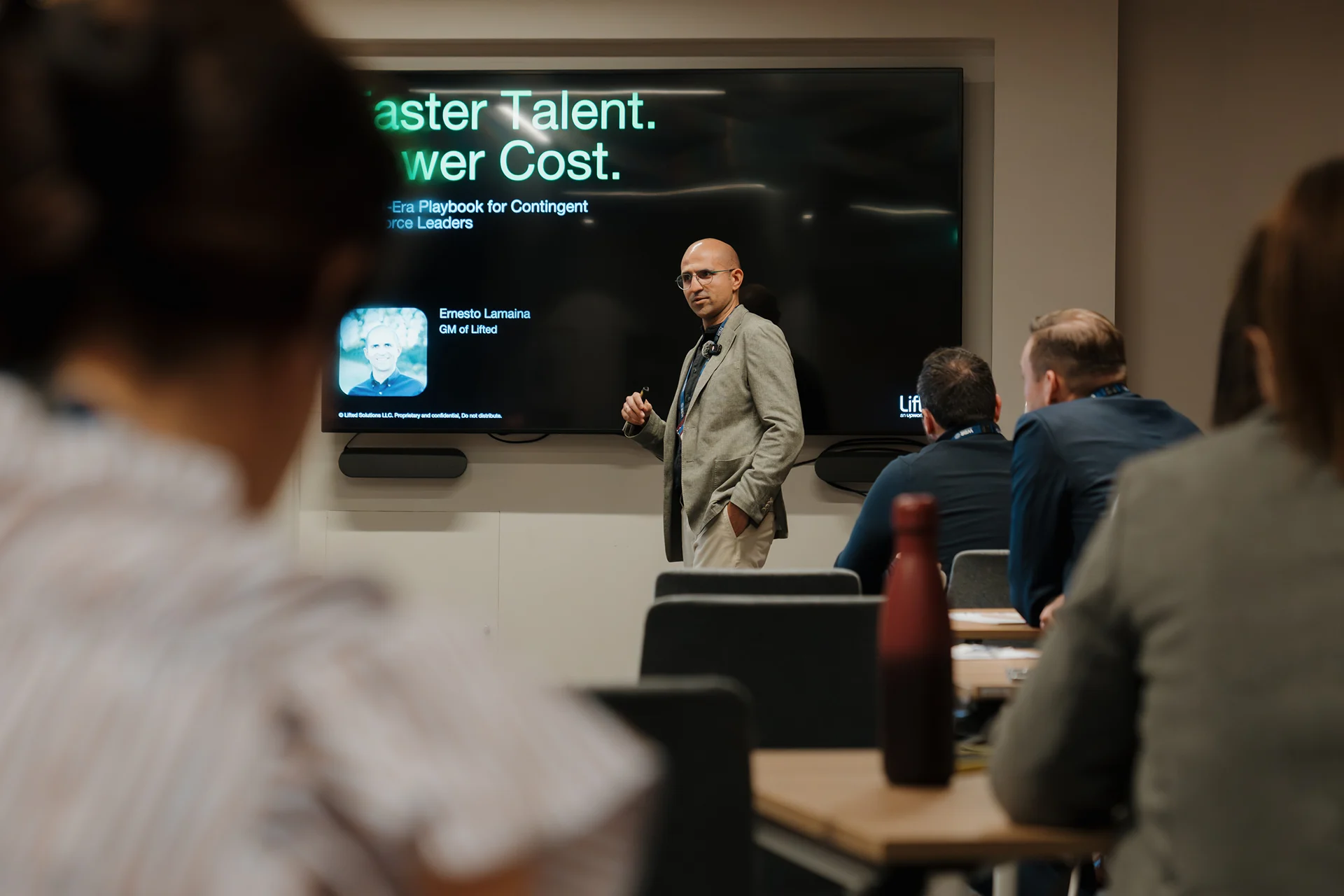
Ernesto Lamaina
GM, Lifted
Ernesto Lamaina is the General Manager of Lifted, an Upwork company dedicated to helping enterprises source, engage, and manage contingent talent across every contract type—independent contractors, staff augmentation, employer of record, and managed services.